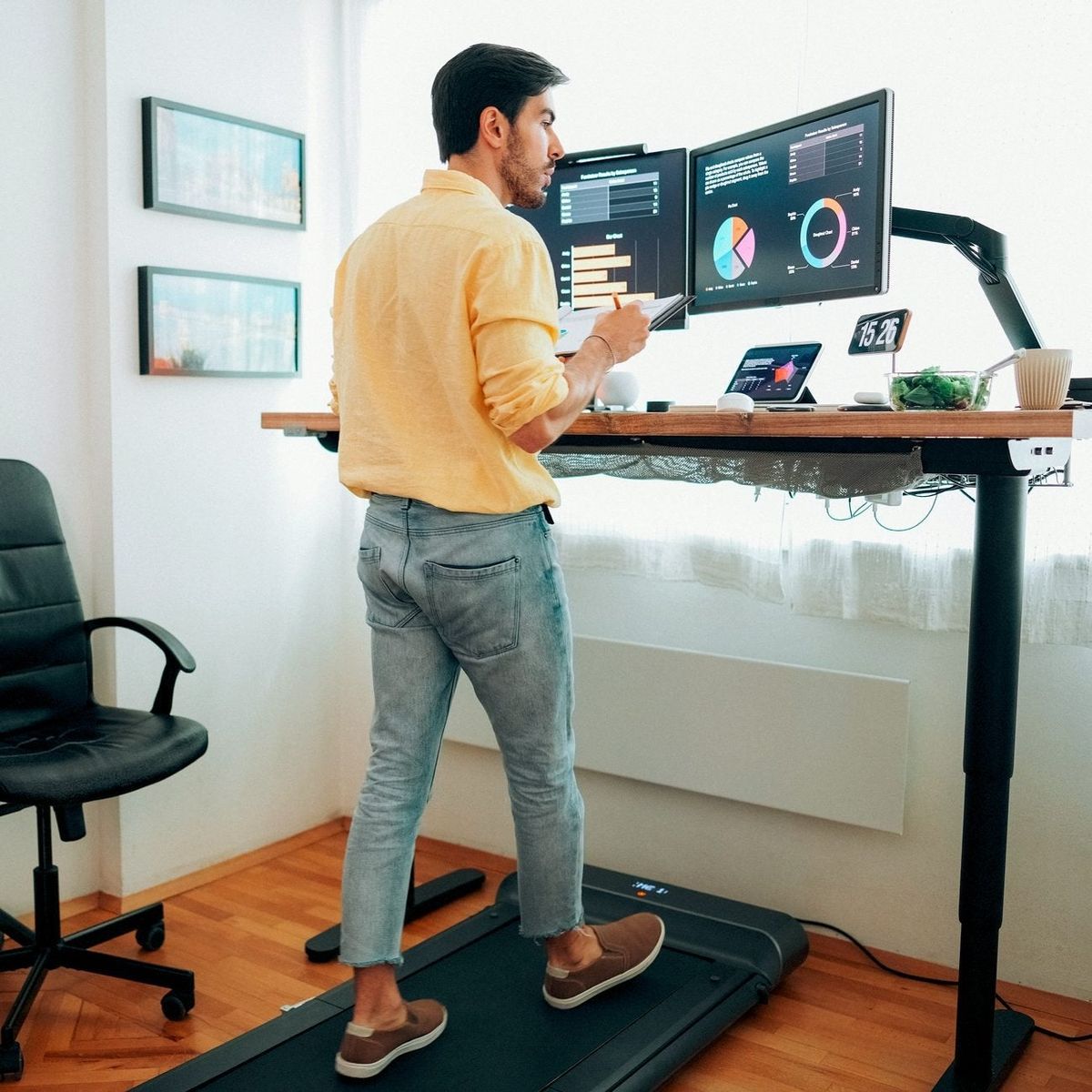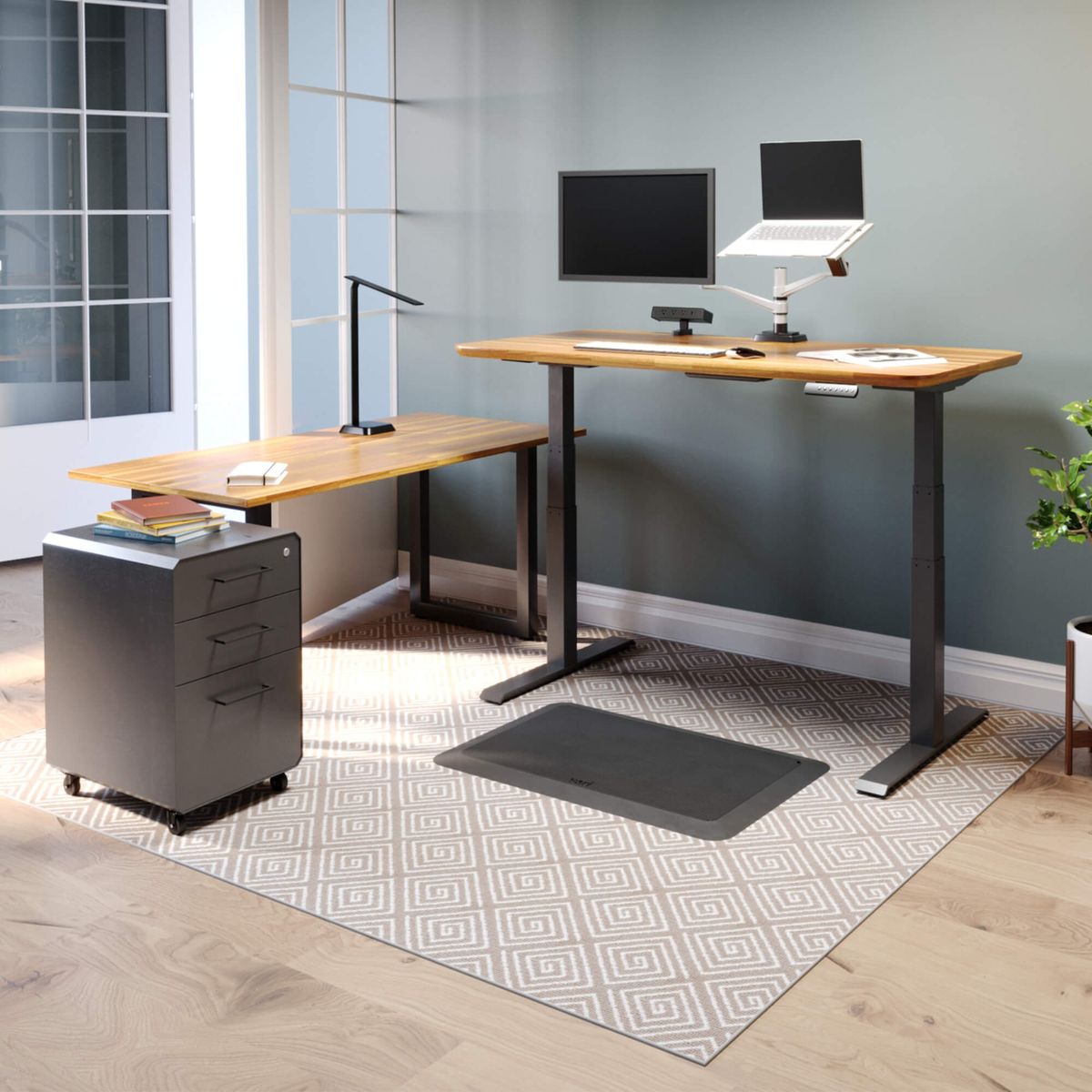
The Standing Desk Height Most People Get Wrong
I see it in every office in Kathmandu. The desk is too high. The monitor is too low. The person is shrugging their shoulders to reach the keyboard. They’re standing—but they’re standing wrong.
And here’s the thing: a badly configured standing desk is worse than no standing desk at all. It causes shoulder impingement, neck strain, and wrist pain. It makes people give up and go back to sitting.
The good news? There’s a simple formula. It takes 30 seconds to measure. And it changes everything.
The 30-Second Measurement
Most people don’t know this: Your ideal desk height is not your elbow height. It’s your elbow height minus 1 inch.
Here’s why: When you type, your forearms should slope slightly downward toward the keyboard. This keeps your wrists neutral and your shoulders relaxed.
The Formula:
- Stand naturally. Arms relaxed at your sides.
- Bend your elbows to 90 degrees (like you’re typing).
- Measure from the floor to the bottom of your elbows.
- Subtract 1 inch. This is your ideal standing desk height.
Example: If your elbow is 42 inches from the floor, your desk should be at 41 inches.
The Quick Reference Chart
If you don’t want to measure, use this chart. It’s based on the ergonomic standards used by the Occupational Safety and Health Administration (OSHA):
| Your Height | Sitting Desk | Standing Desk | Monitor (Sitting) | Monitor (Standing) |
|---|---|---|---|---|
| 5’0” | 22.5” | 36.5” | 45.5” | 59.5” |
| 5’4” | 24” | 39” | 47.5” | 62” |
| 5’8” | 25.5” | 41.5” | 49.5” | 64.5” |
| 6’0” | 27” | 44” | 51.5” | 67” |
| 6’4” | 28.5” | 47” | 53.5” | 70” |
But wait: These are starting points. Your exact height depends on your proportions. Someone with a long torso and short legs needs a different setup than someone with long legs and a short torso.
That’s why we built the calculator.
Use the Exact Calculator
Instead of guessing, use our interactive height calculator. It gives you the exact numbers for your height and position:
👉 Calculate Your Perfect Desk Height
What it gives you:
- Exact desk height for sitting and standing
- Exact monitor height for both positions
- Chair height for proper leg alignment
- Shareable results (send to your setup buddy)
The 5 Most Common Mistakes
Mistake 1: Desk Too High
The symptom: Shoulders creep up toward your ears. Neck tension. Headaches.
The fix: Lower the desk by 1-2 inches. Your forearms should slope down toward the keyboard.
Mistake 2: Monitor Too Low
The symptom: You look down at your screen. Neck flexes forward. Upper back rounds.
The fix: The top of your monitor should be at or slightly below eye level. If it’s not, use a monitor stand or arm.
Mistake 3: Keyboard Too Far
The symptom: You reach for the keyboard. Shoulders extend forward. Wrists bend.
The fix: Your keyboard should be close enough that your elbows stay at your sides. Your upper arms should be vertical.
Mistake 4: Static Standing
The symptom: Your feet hurt. Your knees lock. You fatigue in 20 minutes.
The fix: Alternate. Stand for 30-60 minutes. Sit for 30-60 minutes. Movement is the goal, not standing.
Mistake 5: Wrong Shoes (or No Shoes)
The symptom: Foot pain, plantar fasciitis, heel pain.
The fix: Wear supportive shoes. Not slippers. Not bare feet. Shoes with arch support. Use an anti-fatigue mat if you’re standing for long periods.
The “Set It and Forget It” Trap
Here’s the mistake most guides make: they tell you to set your desk once and leave it.
Wrong. Your ideal height changes throughout the day.
- Morning: You might stand slightly taller.
- Afternoon: You might compress slightly.
- After lunch: You might want to sit.
- During creative work: You might want to stand.
- During focused work: You might want to sit.
The best standing desk is the one you adjust. A fixed-height standing desk is an ergonomic trap. You need a desk that moves with you.
The Monitor Height Rule Nobody Talks About
Your monitor height is more important than your desk height.
Why: Your neck is not designed to flex forward. The human head weighs 5 kg. When your neck is at a 45-degree angle, it effectively weighs 22 kg. That’s like carrying a bowling ball on your neck for 8 hours.
The rule: The top of your monitor should be at or slightly below your eye level. When you look at the center of the screen, your eyes should be looking slightly downward (about 15 degrees).
For dual monitors: The primary monitor should be centered. The secondary should be angled slightly toward you.
For laptops: Use a laptop stand and an external keyboard. Never type on a laptop at desk height. Your neck will thank you.
How to Check Your Setup in 60 Seconds
Do this right now. Don’t read the rest of the article until you’ve checked.
- Stand at your desk. Are your shoulders relaxed? Or are they up by your ears?
- Look at your monitor. Is the top of the screen at eye level? Or are you looking down?
- Check your wrists. Are they straight? Or are they bent up or down?
- Check your feet. Are you shifting weight? Or are you locked in place?
If any of these are wrong, adjust. It takes 30 seconds. It saves you years of pain.
The Nepal-Specific Consideration
Most desks in Nepal are built for the average American height (5’9”). If you’re shorter or taller than average, standard desks are wrong for you.
- If you’re under 5’5”: Most standard desks are too high. You need an adjustable desk or a keyboard tray.
- If you’re over 6’0”: Most standard desks are too low. Your knees will hit the desk underside.
That’s why we built adjustable desks. Our frames range from 70cm to 120cm (27.5” to 47.2”). One desk fits every Nepali—from 4’10” to 6’4”.
Share This With Your Office
Print this guide. Tape it to your office wall. Send it to your HR manager.
The cost of a bad setup: chronic pain, reduced productivity, medical visits. The cost of a good setup: 30 seconds of measuring.
Most people don’t know that their desk is 2 inches too high. Be the person who tells them.
What I Use
I switch between sitting and standing at my Karma Yantra desk. The height-adjustable frame goes from 70cm to 120cm. I stand in the morning, sit after lunch, and stand again in the afternoon.
Calculate your exact height: desk.karmayantra.com/height-calculator
Have a setup question? Email me at contact@karmayantra.com — I answer every email.