I Tried a Standing Desk for 6 Months. Here Are 10 Things I Didn’t Expect.
I bought a standing desk because my back hurt. That was the whole plan.
Six months later, my back feels better. But that’s actually the least interesting thing that happened. I didn’t expect to sleep deeper. I didn’t expect to solve problems faster. I didn’t expect that my afternoon energy crash would vanish—not from caffeine, not from willpower, but from simply changing my posture.
This isn’t hype. This is what actually happened when I stopped sitting for 8 hours a day.
1. My Brain Woke Up
What I noticed: Complex problems that used to take me until evening suddenly clicked by 11 AM.
The science: Standing increases blood flow to the brain by up to 15%. More blood means more oxygen and glucose. Your brain literally gets more fuel.
The surprise: It wasn’t gradual. It was sudden. Around week 3, I noticed I was bored of sitting. My brain wanted to stand.
2. I Started Sleeping Like a Teenager
What I noticed: I used to scroll until midnight, wired. Now I get tired at 10 PM and sleep through the night.
The science: Standing helps regulate your circadian rhythm. Your body learns when to be active and when to rest. The physical engagement of standing signals “daytime” in a way that sitting in a chair doesn’t.
The surprise: I didn’t exercise more. I didn’t change my diet. I just stood instead of sat.
3. The 3 PM Slump Disappeared
What I noticed: I used to dread 3 PM. Now I don’t even notice it.
The science: Standing releases endorphins and increases serotonin. These are natural mood stabilizers. When you’re standing, your body is in a mild state of activation—like a slow burn of energy.
The surprise: I don’t stand all day. I alternate. But even 2 hours of standing seems to prevent the crash that used to hit me every afternoon.
4. I Burned Calories Without Trying
What I noticed: My clothes fit slightly better after 3 months. I didn’t change anything else.
The science: Standing burns approximately 50 more calories per hour than sitting. Over an 8-hour workday, that’s 400 extra calories. That’s equivalent to a 45-minute walk.
The surprise: It’s not dramatic. It’s invisible. But over 6 months, 400 calories/day × 120 workdays = 48,000 extra calories burned. That’s real.
5. My Blood Sugar Stopped Spiking
What I noticed: After lunch, I used to feel foggy. Now I don’t.
The science: Standing after meals reduces post-meal blood sugar spikes by 43% (University of Chester study). This is particularly important for people with insulin sensitivity, but even healthy people benefit from stable glucose.
The surprise: I just stand for 30 minutes after lunch. That’s it. One simple habit.
6. My Heart Rate Changed
What I noticed: My resting heart rate dropped by 4 beats per minute.
The science: Standing engages your cardiovascular system. Your heart works slightly harder, which strengthens it over time. Regular standing reduces your risk of heart disease by improving circulation.
The surprise: It’s a small number. But over a lifetime, 4 BPM × 24 hours × 365 days = a significantly less stressed heart.
7. I Focused Longer
What I noticed: I used to check my phone every 10 minutes. Now I can focus for 90-minute blocks.
The science: Standing increases alertness. Your body is in a mild state of readiness—like standing at attention. This prevents the micro-sleep state that sitting induces.
The surprise: It’s not forced. I don’t will myself to focus. I just stand, and my brain cooperates.
8. My Digestion Improved
What I noticed: Less bloating after lunch. No more post-meal heaviness.
The science: Standing upright allows gravity to help your digestive system. Food moves through your stomach and intestines more efficiently.
The surprise: I used to think this was my diet. It was my posture.
9. I Reduced My Long-Term Risk
What I noticed: Nothing. That’s the point.
The science: Prolonged sitting is linked to increased risk of diabetes, heart disease, and certain cancers. The studies are large, longitudinal, and consistent. Standing desks aren’t a cure-all, but they reduce sedentary time—the factor most strongly correlated with these risks.
The surprise: The benefit isn’t something you feel. It’s something you avoid. And that’s the hardest benefit to appreciate until it’s too late.
10. My Posture Fixed Itself
What I noticed: I stand straighter. I sit straighter. My core is engaged even when I’m not thinking about it.
The science: Standing engages your core muscles automatically. Over time, these muscles strengthen, which supports your spine even when you’re sitting.
The surprise: I didn’t do a single crunch. I didn’t do physical therapy. My core got stronger from standing.
How to Start (Without Quitting on Day 3)
Most people fail because they try to stand all day on day one. That’s like running a marathon without training.
The 30-Day Standing Transition:
| Week | Standing Goal | Sitting Break |
|---|---|---|
| 1 | 30 min/day | Every 30 min, sit 30 min |
| 2 | 1 hour/day | Stand morning, sit afternoon |
| 3 | 2 hours/day | Alternate every hour |
| 4 | 3 hours/day | Listen to your body |
Essential tools:
- Anti-fatigue mat: Reduces foot pressure. Non-negotiable.
- Proper desk height: Use our calculator
- Good shoes: Not slippers. Not bare feet. Shoes with support.
The Cost of Sitting
If you work 8 hours/day, 5 days/week, 48 weeks/year:
- Sitting: You sit for 1,920 hours per year.
- Standing 2 hours/day: You reduce sitting by 480 hours per year.
- Standing 3 hours/day: You reduce sitting by 720 hours per year.
That’s not a small change. That’s a lifestyle change.
Share This With Someone Who Needs to Stand Up
If you know someone who complains about back pain, fatigue, or afternoon crashes, send them this. The science is clear. The transition is simple. The benefits are real.
Most people don’t know that standing for just 2 hours a day can transform their energy, sleep, and focus. Be the person who tells them.
What I Use
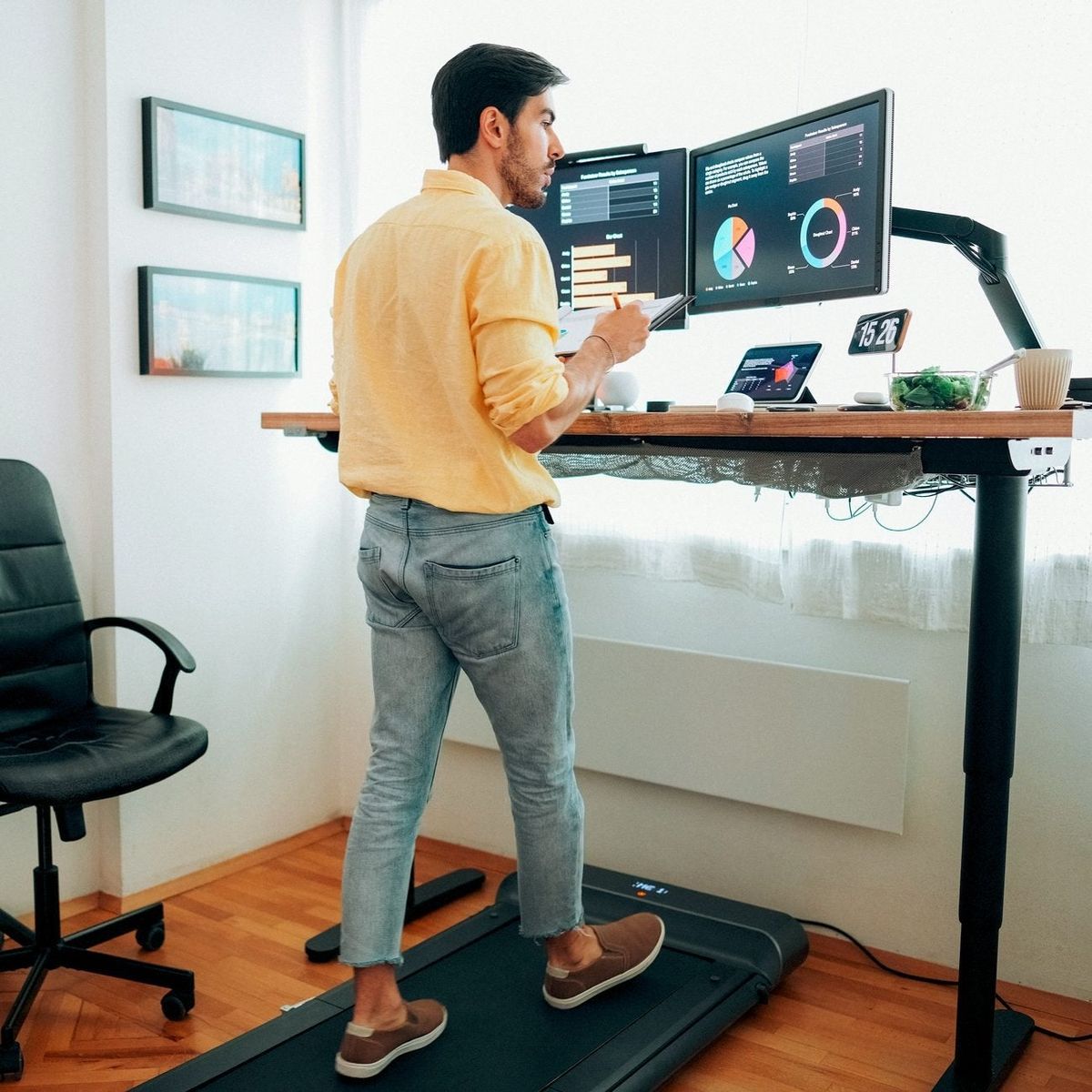
I alternate between sitting and standing at my Karma Yantra desk. The height-adjustable frame lets me switch positions in 10 seconds. I stand in the morning, sit after lunch, and stand again in the afternoon.
Have your own standing desk story? Email me at contact@karmayantra.com — I feature reader stories every month.